12/17/10

On tourism

Me quedan cinco dias. Five days! That's overwhelming and exciting and sad all at once. On Wednesday night I'll take a red-eye to LAX and then another flight to Seattle, arriving just in time for Christmas Eve with my family. Here in Lima, summer has finally arrived after months and months of fog and chilly humidity (yeah, it's a whole different ballgame). Nativity scenes and blue-eyed Santa Clauses have popped up on the facades of pollerias and corner stores, and the palm trees in the park in front of my house have been adorned with strings of lights and speakers that blast tinny Christmas music every night between 6 - 11 PM. It's all somewhat surreal.

Rach and I decided to squeeze in two final, quick trips (between my performance and her finals) before I head back to the States. I haven't had time to write about the trip to Cajamarca last month, so I'm playing catch-up now. Cajamarca is in the northern part of Peru, in a valley fringed by big international mining companies from the US, China, and other countries. The cityand land is gorgeous, but the mining industry is ever-present-- in the huge trucks that roar through the streets and hills, in the municipal projects that "represent new relationships between the public and private sectors" (i.e. are funded by Yanacocha). A taxi driver named Antonio took us out to the Ventanillas de Combayo, supposedly an Incan burial ground, and explained that a person working for the mining companies can earn a salary 4 or 5 times greater than, for instance, a teacher (and perhaps 8 times greater than that of a domestic worker in Lima). He says that almost every family has an uncle or a son or a father working in or for the mines, so who can protest? Well, he has a point. From my tourist's point of view, Cajamarca seems to have more wealth than other cities I've visited in Peru. It also has noticeably more old women begging for money in the plazas all day before hiking home, up to the hills, at night.

I share this because I think it's important-- for me, for other potential tourists-- to think critically about the places we visit and to examine how we contribute to unjust systems. Rachel and I have tried to be responsible tourists this year, visiting friends of friends instead of "tourist destinations" and planning our own trips instead of going through agencies in hopes of having more control of where and to whom the money goes. But tourism is a complicated and ugly beast. At Machu Picchu, for instance, the guards make barely enough money to support themselves in pricey Aguas Calientes, and they're often fired three months after they're hired, a post-Fujimori development that means that the guards never become eligible for health insurance (it's common practice in many of the supermarkets as well). We learned this from Clemente, a guard who led us up the mountain at 3 AM.

This is a longer discussion, one that I'll happily have with anyone who is thinking about visiting Peru, but I'll leave it there for the time being and just show you some lovely pictures of Cajamarca...

At the hot springs at the Banos del Inca, where Athaulpa supposedly bathed before the Spaniards killed him and ransacked the city's gold. I'm oversimplifying a lot of very complicated stories into this one little blog post, aren't I?

Las Ventanillas del Combayo... empty tombs built by the Incans. Suprisingly similiar to the above-ground tombs that you find today in cemetaries in and around Lima.

Rachel and I decided to do a day hike to Cumbe Mayo. We read that it was about 20 kilometers away from Cajamarca and thought, "20 kilometers is about 6 miles, right? No problem." We weren't worried when everyone we asked for directions warned us that it was leeeeeeejos, far away.

It turns out that 20 kilometers is actually about 12 miles, and we didn't reach Cumbe Mayo (above) until about 4 PM, two hours before sunset (I know, we should have turned back, but we were so close. Mentira.) Luckily, a bunch of hippies gave us a ride back to the city.

On our way back to Lima, we stopped for a few hours in Chimbote, where my buddy Cathleen is working as a nurse this year, to eat some early-morning combinado (cebiche and tallerines a la huancaina-- spaghetti with hot aji pepper sauce) and to reminisce over plastic cups of sweet Chimbote wine.

Another post about our second trip, to the Selva, coming later this afternoon (gotta post this stuff before I head home, because who wants to read a travel blog once the travels have ended?)...

11/27/10

Thanksgiving a la Criolla

Hello friends and loved ones! I meant to post this on Thursday so I could wish you all a happy Thanksgiving, but by the time we finished cooking, our guests were sitting at our table; by the time we finished eating, it was well after midnight and I was, as they say here, full. Yesterday I spent the day in Ventanilla for a conference call with some Romanians and THEN a surprise party with all of the workshop participants from Jovenes de Buena Voluntad! They are so great.

So, I send you Thanksgiving love a few days late. I hope your turkeys/turduckens/tofurkens/pasta salads were delicious. I love
you all. AND special Thanksgiving love goes to Leah, Jeff, and their baby boy!!! I don't actually know if they read this blog, but I am excited for them nonetheless. Now I'm waiting for news from Jessica and Todd... Hillson/Krause/Hanley family, let me know!

So Rachel and I decided that it would be a good idea to plan and cook a Thanksgiving meal for a bunch of our Peruvian friends. The only challenge: we've never actually made a turkey, or cooked a whole holiday meal on our own, and also there are no cranberries in Peru as far as we can tell. In light of such challenges, we decided to throw THANKSGIVING A LA CRIOLLA, taking all of the flavors of Thanksgiving and approximating them with Peruvian foods.

Our menu?
  • "Pavo" a la brasa (good thing there's a rotisserie turkey place on our block)
  • Relleno de pastel de choclo, vegetables, and aji amarillo (corn bread and hot pepper stuffing)
  • Mango/Limon Chutney and Mango Salsa-- we were aiming for sweet&tart like cranberries. It kind of worked.
  • Pure de papas nativas (mashed potatoes) & vegetarian gravy
  • Ensalada de espinaca
  • Guacamole de puta madre (a staple at all parties) ("de puta madre" is slang for crazygood, but one shouldn't say it to the older ladies at Spanish mass)
  • Pie de camote y coco-- definitely the star of the show. Our friends Leidy and Betty made this sweet potato and coconut pie; it came out tasting like pumpkin pie, but better. Much, much better. Full disclosure: we stole the recipe from the Times, and you can make it, too.
Pictures below...

Here is my mango/limon chutney... really easy to make; just combine a cup of sugar and a cup of white vinegar and bring to boil, then add mango, golden raisins, garlic, lime zest, and lime juice and let simmer for about 45 minutes, stirring occasionally. WHAM.

Betty and Leidy, working on the Pie de Camote

Rach, with her stuffing made of pastel de choclo (pretty much corn bread), veggies, a chicken heart or two that we may have bought for about 68 cents, and aji amarillo.

Mmmmm... pie de camote in the center of the table

Happy Thanksgiving, everyone!

11/15/10

Talentooooo Urbanoooo

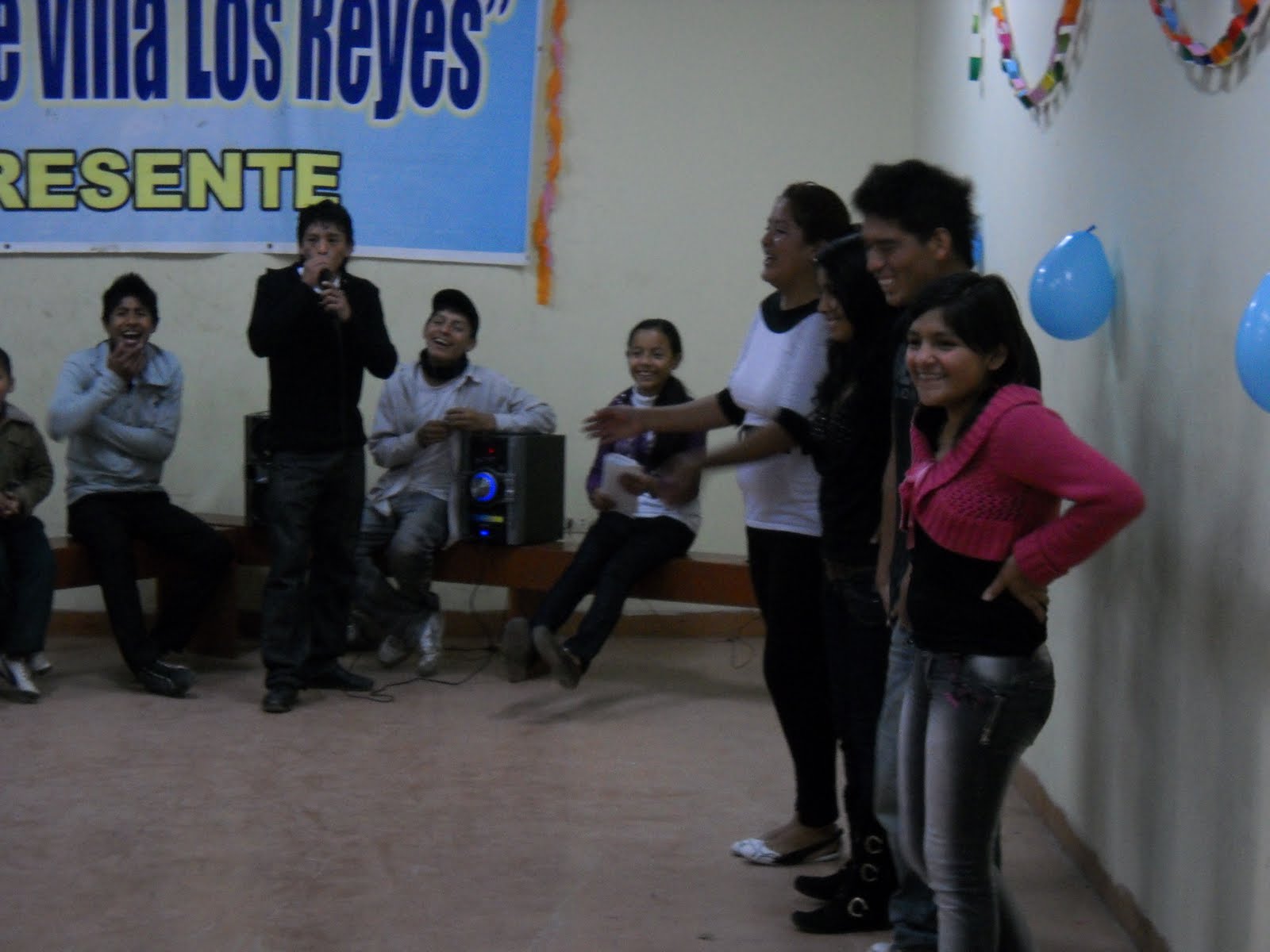
On Sunday, my students from Jovenes de Buena Voluntad presented the show we've been working on for the past two months! JBV is a community-based organization run almost entirely by young people in Ventanilla, with help from one adult leader and a few volunteers from the area and abroad. The idea of the organization is that volunteers can suggest workshops, and the participants give feedback and then decide whether they want to participate. The young people also plan events and organize volunteer opportunities for themselves. It's a great model of grassroots organizing that emphasizes the importance of working in solidarity, and I've really loved working with them.

So: we staged TALENTO URBANO, a variety show that included improvisation, salsa, an original skit, juggling, and an awesome dance-off between break dancers and zanqueros (stilt walkers). The whole thing came together somewhat miraculously, considering that most of the actors missed our dress rehearsal (así es) and that we started about an hour late (par for the course). (A side note: a huge part of my learning curve has been relaxing my ideas of what it means to start "on time.") Nonetheless, the show was great-- the audience was really into it, and we had a full house by mid-show (people trickled in when they heard the music); the performers were energetic and funny and exciting to watch; and this was one of the first public events for JBV's new group in Villa los Reyes, so we got to share some of the work with the students' families and to spread the word about Jovenes de Buena Voluntad. On top of that, it was a lot fun, which was really the whole point in the first place.

Anyway, here are some pictures. Bravo to all of the performers!

*********

El domingo, ¡mis estudiantes de Jóvenes de Buena Voluntad realizaron el espectáculo en que hemos trabajando por dos meses! JBV es una organización de la comunidad que está guiado casi totalmente por jóvenes en Ventanilla, con el apoyo del un líder adulto y varios voluntarios locales y extranjeros. La idea de la organización es que los voluntarios sugieren talleres, y los participantes dan consejos y, de allí, deciden si quieren participar. Los jóvenes también planean eventos y organizan oportunidades para ellos mismos. Es un buen modelo de organizando de base que enfatiza lo importancia de trabajar en solidaridad, y me encantó la experiencia de trabajar con ellos.

Entonces: realizamos TALENTO URBANO, un espectáculo que incluyó improvisación, salsa, una escena original, malabares, y una competencia de baile entre bailadores de break y zanqueros. Todo se arregló por milagros, creo, considerando que la mayoría de los actores les faltó nuestro último ensayo (así es) y que empezamos más o menos una hora tarde (normal). (Una nota: un gran parte de mi aprendizaje ha sido un relajamiento de mis ideas de que significa “empezar a tiempo.”) A pesar de todo, el espectáculo fue bacán: los espectadores se lo gustó, y el espacio estaba llena después de un tiempo (la gente entró poco a poco que escuchó la música); los actores fueron energéticos y graciosos, y fue emocionante a mirarlos; y eso fue uno de los primeros eventos públicos del nuevo grupo de JBV en Villa los Reyes, y entonces pudimos compartir el trabajo con las familias de los estudiantes y también pasar la voz sobre Jóvenes de Buena Voluntad. Al fin, fue muy divertido, lo que fue la meta al comienzo.

Aquí va algunas fotos. ¡Bravo a todos los actores!

Franco, Ali, y GianMarco

Ficha por Vanessa/Flyer, by Vanessa

Competencia entre los Zanqueros y Baildores del Break
Dance-Off between Stilt-Walkers and Break Dancers

Ray

Experta con 4 cabezas: Leti, Vanessa, Michel, Geysi
Four-headed Expert

11/3/10

Several Things of Note, brevemente

1. Last week was SexFest, or the First Annual Festival of Sexual and Reproductive Rights with la Casa de Panchita. Since May, we've been working with a group of about 25 young people to use Forum theatre and improvisation to talk about sex. The project was cool; the students were awesome; their pieces were funny, smart, and honest. But the event was a bit of a mess: the microphones malfunctioned, we started way late and wasted a lot of time battling with the mics, and the attendees were, at times, a bit out of control. Balloons, it turns out, are a lot more fun to pop than to admire from a distance, especially when it becomes clear that your teachers and those stupid extranjera volunteers in the funny vests aren't going to stop you (in my defense: I was busy working with my actors and couldn't do classroom management for 200 at the same time). It was disheartening.

But. BUT. There were still some major victories among my students: many of them had never acted before, and they did a great job. And they were speaking out about really important stuff-- contraception, abortion, consent. That was awesome. I was so, so proud of all of them.

2. I'm applying to grad school. It's not as easy as it looks.

3. I'm concerned that our Peruvian Perro sin Pelo may have brought fleas into the house, which seems counterintuitive since he doesn't have any hair. Nonetheless, something's been nibbling on me. Don't worry-- this isn't like the Great Bed Bug Panic of 2009-- but it IS disconcerting. Today I finally got up the nerve to clean under my bed. I found no bugs, just an alarming amount of dust and maybe some mold. Eurgh.

4. Rehearsals for the performance with Lili and Coqui are going well. We still need a title. More to come on that.

5. Talked to my little brother today, which was great! Gosh, I like him.

6. Elections last night deserve a comment. That comment is this: Obama et al, don't spend two years ignoring and mocking progressive voices and then blame us when the Democrats lose (check out Glenn Greenwald's comments about this here). And also, Russ Feingold, you will be missed.

7. On Monday, my housemate Erick took Rachel and me to the cemetery in Comas for Dia de los Muertos, or Dia de los Vivos, depending on who you talk to about the name. It was incredible. I don't have pictures because I decided to leave my camera at home, but I'll publish Erick's video when he finishes editing it. Stay tuned.

10/30/10

Señor de los Milagros

Hello my loved ones and fans.

I know you've been pining away for months, checking my blog daily, desperately hoping for another post.

I apologize. It's been a busy two months. I've been teaching workshops, rehearsing with students for this week's Festival of Sexual and Reproductive Rights (or "SexFest," as my friend Dalia called it), working on a performance project with two friends. Perhaps I will write more about these things later. In the meantime, though, here's a video, made by my roommates for their video blog cuarto de azotea about the Señor de los Milagros procession this past Thursday. Keep your eyes open: I make a brief appearance in the first minute.

Basically, the story is this: a coupla hundred years ago, this Peruvian guy painted an image of a Brown Christ. Then there was an earthquake, and although much of the city was destroyed, the church holding this painting remained intact. People started visiting the image and worshipping in front of it; Spanish Colonial Catholic Church got miffed and sent a couple of Spanish minions to destroy it; the minions claimed that a miracle stopped them from doing so (or maybe they were just refusing to follow orders). The people rejoiced and started parading the image through the streets once a year. Catholic Church was still miffed, but eventually they got over it.

Fast forward to last Thursday. This procession is now one of the biggest in all of Peru. Lots of ladies crying, tons of people-- too many; it felt a little dangerous at one point as thousands of people tried to get as close a possible-- and plenty of anticuchos (cow's heart skewers) to be eaten. Catharsis never tasted so delicious.

9/1/10

Produce Bragging Rights


I purchased this incredible bounty for less than $7 USD.
The mango was out of season and could have been sweeter, but then again,
you can't have everything.

8/30/10

Home Again

Hello best and brightest.

So here's a summary of the past six weeks or so of my life: my pata pata Sophie came to visit me and Rachel; we threw her in a bus to Lake Titicaca and then essentially abandoned her on a farm for a week; we all came back to Lima, and I spent a few days breathing and dancing and experimenting with Yuyachkani; we hopped on a plane to Medellin, Colombia, where we reuned with several of my best buddies from college; there, my friend Rebecca got married to a lovely young man named Walter; Rachel and I came back to Lima and ate a lot of good food with her sister Claire and her uncle Norm; and also I started teaching two theatre workshops.

Life is great when you get to go on so many vacations.

Well, normal life is good, too. But before we get to that, here are some pictures from the above-mentioned adventures.

At the Santa Catalina Monastery in Arequipa, reconnecting with those Sacred Heart roots.

We went hiking in the Canon del Colca, the second-deepest canyon in the world (deeper than the Grand one) (it was a pretty good hike).

We spent several days with two communities of Suma Yapu, a network of families and an organization that's working to preserve farming, cultural, and medicinal traditions in the Lake Titicaca region. They don't have a lot of info in English on the web, but there's some info about the organizers in this Spanish-language documentary, and I can pass information on to anyone who might be interested in visiting and learning from members of their communities.

Here, Gladys, Roxanna, and Martina taught me how to make waha (watya/Pachamama), an amazing, natural oven. We threw in a bunch of potatoes and some straw, got a good fire going, collapsed the walls of the oven, waited an hour, and then dug up a feast of sweet, delicious papas. Yum.

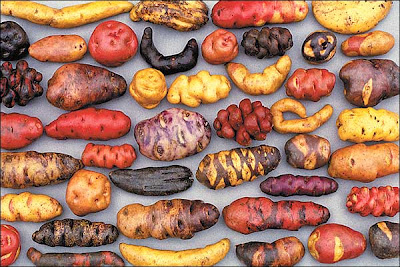
Speaking of potatoes, they grow over 130 varieties of potato in the community of Rio Saltado alone. Know how many we grow in the US? About five. Five! Don't believe me? Read this and weep.

Juli was beautiful and cold. So, so cold. I heard later that it got down to -10 degrees celsius at night, or 14 degrees fahrenheit. I'm glad I didn't know how bad it was at the time.

Rachel's host-mamita Esperanza and two of my host-mamitas, Martina and Brigida, prepared an amazing feast of potatoes and various spicy salsas. This was unbelievably delicious for all of us who enjoy eating potatoes, which is to say, for everyone except Sophie.

This is quinua, btw. Beautiful, no?

Then we went back to Arequipa.
Arequipa is known for its food.
It was overwhelming.

Then Rebecca and Walter got married!

We were faklempt.

We visited la Piedra del Penol, about two hours outside of Medellin. Rachel and Annie lost several rounds of poker, hence the wig and tiny hat.

The best part of growing up and diaspora-ing is that the reunions are amazing.

In my next post: the Laboratorio Abierto Internacional with Yuyachkani!

7/10/10

Two Things I Love, One Thing I Hate

Helloooooo friends. Things here are busy-- I'm working on a few performance projects and on a reproductive rights workshop series with teenagers. I'm also gearing up for the next month, which is going to be pretty kick-ass: two weeks of backpacking in Arequipa and Puno with Sophie, one week training intensively with Yuyachkani, and one week in Colombia for Rebecca's wedding. What a life I have.

So, short and sweet updates are in order. Here I give you:

TWO THINGS I LOVE ABOUT LIFE HERE IN LIMA, AND ONE THING I HATE

One thing I love about life here in Lima: grocery shopping.

Rach and I take turns going to our local market, where the World Cup is usually blasting from several stalls (can't believe I'm rooting for Espana) and where my favorite fruit stand lady gives me free samples of everything, which is probably not good for my digestive system, but it is oh so delicious. If you are in North America right now and feeling pretty smug about your summer fruits, I pity you. Your fruit is weak and limited in scope. Here I can choose between at least nine varieties of banana! Here I can eat grenadilla (grenadine, maybe? I don't even know if it exists up north) or granada (pomegranate) or maracuya (passion fruit)! Oh, it is so succulent!

Then I go to the vegetable stand guy, who fills my enormous canvas bag to the brim with vegetables and charges me a seemingly-arbitrary price that usually is less that $5 USD. From him I buy cilantro and tomatoes and onions and carrots and beets and peppers and squash and, best of all, potatoes:


One thing I hate about life here in Lima: telephone norms.

We don't have an answering machine on our home phone here. So, you know, if someone calls the house and no one picks up, the phone can keep ringing indefinitely. Unfortunately, everyone in Peru seems to interpret "no one's picking up the phone" not as "eh, guess they aren't home," but as "they're just too lazy to come to the phone," and so they hang up and call again. And again. And again.

... Of course, since I am actually just too lazy to come to the phone, and since the call is almost always for one of my roommates who isn't home, and since no one ever seems to want to leave a message but instead just says, "Oh, well, if he's not home, I guess I'll just call his cell phone," this makes me crazy.


Another thing I love about life here in Lima: Camote.

Camote is Malato's roommate and is staying with us while their owner is travelling. He is, if possible, even more unfortunate than Malato: he has a chronic skin disease (possibly cancer) that causes him to bleed, constantly. Yesterday I caught him rolling around on my pajamas, on my bed, bleeding profusely. (My bedroom door will henceforth remain closed.)

But. He is so precious, and I love him.